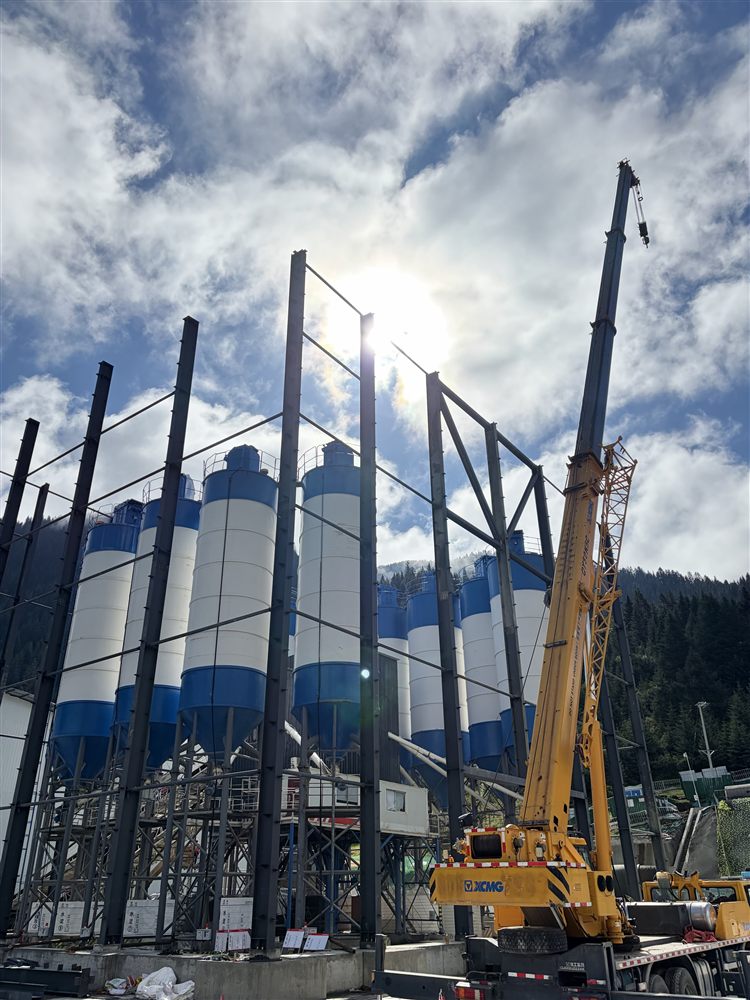
The Indonesia HZS180 double-line ready-mix concrete plant project is a strong reference for buyers planning commercial concrete supply in Southeast Asia. The Indonesia HZS180 project case shows the plant structure, mixer platform, silos and double-line arrangement that a buyer should compare with land size and truck dispatch needs.
For Indonesia and other tropical markets, the discussion should include rain protection, aggregate moisture, site drainage, power supply, spare parts and operator training. These details affect daily output after installation.
Commercial ready-mix checks
- Use the HZS180 flat-belt model page to compare mixer capacity, conveyor design and structure.
- Plan truck loading routes, aggregate feeding and cement silo storage before confirming the layout.
- Check project photos, control room proof and export packing evidence.
- Match the configuration to expected daily orders, not only peak hourly capacity.
Tropical operation changes the configuration
The project photos show the installed HZS180 double-line plant, while the final rain and moisture-control strategy must be verified from the contract. In a tropical market, covered aggregate storage, drainage, conveyor protection and rapid moisture correction can protect consistency. Water entering sand stockpiles changes both aggregate mass and the free water in the recipe, so laboratory and control-room procedures must be connected.
Plan from orders and dispatch cycles
A ready-mix business needs enough trucks to move concrete before the next production slot, not simply enough mixer capacity. Calculate peak departures from legal truck volume and full round-trip time. A double line adds value when the sales schedule, fleet and yard can receive its output. If trucks queue under the mixers or return in groups, nominal plant capacity will not become delivered sales.
How to use the 70% commissioning reference
Early operation at roughly 70% of theoretical capacity can be used as a conservative planning scenario while the team learns loader timing, moisture correction, recipe changes and truck dispatch. It is not presented here as a measured result for this Indonesia project. The buyer should agree on a test recipe, timing boundary and reporting format before using a commissioning run as evidence of sustained output.
Control room, laboratory and staffing
One experienced operator can potentially supervise two automated lines from a unified control room during stable production, provided alarms, interlocks and material routes are correctly designed. Separate personnel are still needed for loader operation, dispatch, quality control and maintenance. An onsite laboratory may support aggregate moisture tests, slump checks and specimens, but the tests and acceptance authority must be defined by the operating company and local requirements.
Questions for the final layout review
- Where do loaded and empty trucks queue without crossing the loader path?
- How are aggregate stockpiles, drainage and rain protection arranged?
- Can either line operate independently when the other line is cleaned or serviced?
- Which spare parts must be held locally because island delivery may take longer?
Information needed for a useful quote
Send destination island or city, ready-mix sales target, concrete grades, land size, aggregate conditions, rainy-season requirements, voltage and preferred startup time. Mikkino can then recommend a practical ready-mix concrete plant configuration and quote path.